
Tallahassee City Commission Seat 3: A Community-Centered Analysis!

What should Tallahassee’s Black residents expect from their next commissioner?
Tallahassee City Commission Seat 3 is an open seat, and that matters. Whoever wins will not simply inherit an office; they will help determine the balance and direction of City Hall.
For ALERT, the question is bigger than whether a candidate gives good answers during election season. We want a commissioner who understands that Black communities should not have to rediscover their elected officials every four years.
We are looking for someone who will listen before making decisions, challenge systems when they produce inequitable outcomes, protect neighborhoods from displacement, demand transparency from city management, invest in historically neglected communities, protect our environment and public resources, and remain accessible after the campaign signs come down.
This is also why history matters. Campaign platforms tell us what candidates promise to do. Their records, relationships, community presence and campaign financing can help voters judge what they may actually do once elected.
The following assessment combines ALERT’s member review with additional research on candidate platforms and publicly reported campaign finance information.
OUR TAKE ON SEAT 3

Talethia Edwards — The Known Community Advocate
ALERT Community Rating: 2.95 / 4
ALERT Designation: Recommended Candidate
Website: https://www.talethiaedwards.com/
The case for Edwards
Talethia Edwards has an advantage that cannot be manufactured during a campaign: people know her.
Long before she became a candidate, Edwards was visible in neighborhood advocacy and community-development work. Her record includes leadership of the Greater Bond Neighborhood Association, work on the neighborhood’s planning process, housing advocacy and nonprofit leadership. Her campaign highlights the Greater Bond plan and the resulting $6.4 million investment, as well as her service on the Tallahassee-Leon Housing Leadership Council.
That history created a trust factor among many ALERT reviewers. The sentiment was essentially: we’ve seen Talethia doing this work before she needed our votes.
Her campaign describes her approach as moving “From Advocacy to Action” and emphasizes people-centered leadership rooted in listening and accountability.
The concern
Familiarity does not eliminate legitimate questions about political independence.
The recurring concern among ALERT members was Edwards’ relationship with political and development interests that some members view as contrary to ALERT priorities. That concern is not purely rhetorical. Public campaign-finance records show contributions from construction, property-management and development-related entities, alongside substantial support from individuals and organizations throughout the community.
Her campaign reported approximately $94,494 in monetary contributions in the available financial summary, making hers one of the best-financed campaigns in the field.
That does not establish that donors control a candidate. It does, however, make the appropriate accountability question straightforward:
Can Edwards maintain the same community-centered independence inside City Hall that built her credibility outside it?
ALERT read
Strength: Deepest demonstrated Black community relationships and one of the strongest pre-campaign records of neighborhood work.
Question: Whether political and donor relationships will constrain that community-centered orientation once governing begins.

PJ Perez — The Progressive Policy Candidate
ALERT Community Rating: 2.46 / 4
The case for Perez
If this election were decided strictly on progressive policy alignment, PJ Perez would be difficult to overlook.
His platform centers affordability, public trust, public safety and limiting the influence of special interests. His campaign puts the economic argument plainly:
“Tallahassee just isn’t affordable for too many people today.”
He argues that local government should put working families ahead of big-money interests.
Perez also brings nearly 15 years as a public-school teacher, including substantial time at SAIL High School. That gives him an unusual connection to generations of young Tallahassee residents and families.
His campaign reported approximately $67,931 in contributions in the available financial summary.
The concern
For ALERT reviewers, Perez’s weakness was not primarily policy. It was relationship and history.
Several members found themselves asking: Where have we seen him before this election?
Perez speaks directly to several issues important to Black and working-class residents, but many ALERT reviewers could not point to the same history of visible engagement with Black civic organizations, neighborhood struggles and specifically Black political issues that they could identify with Edwards.
That distinction matters.
There is a difference between having policies that benefit Black people and having demonstrated relationships with Black communities that help determine whose voices shape those policies.
ALERT read
Strength: Arguably the clearest progressive policy agenda in the field, particularly on affordability, working families, special interests and government accountability.
Question: Whether his strong policy alignment will develop into durable relationships and accountability within Tallahassee’s Black community.

Max Herrle — The Policy Technician
ALERT Community Rating: 2.34 / 4
The case for Herrle
Max Herrle may be the most politically experienced operator in the field.
His background includes work as a political consultant, lobbyist and adviser to elected officials and labor unions. That experience matters because governing is not simply about having good ideas. Commissioners must understand budgets, bureaucracies, coalitions and how to move policy through institutions.
Herrle’s campaign is unusually specific. He proposes reducing average utility bills by $65 per month, establishing city-run 24/7 childcare, providing free public summer camps and creating a city internet service priced around $60 per month.
His campaign reported approximately $31,875 in contributions in the available financial summary.
The concern
The paradox of Herrle’s candidacy is that his greatest asset—political experience—is also part of his vulnerability.
He understands the political system, but some voters question his credibility because of his history within that system. His campaign-finance records also include contributions from real-estate and development-related interests, although those records contain many smaller individual contributions as well.
For ALERT reviewers, there was another gap: prior to this election cycle, Herrle was not widely identified as an outspoken advocate on specifically Black community issues.
Technical competence is valuable. But Black communities have seen plenty of technically competent people administer systems that still produce inequitable outcomes.
ALERT read
Strength: Strong policy knowledge, political experience, and potentially the technical capacity to translate ideas into government action.
Question: Trust—and whether his political expertise would be consistently deployed in service of communities that historically have had less institutional power.
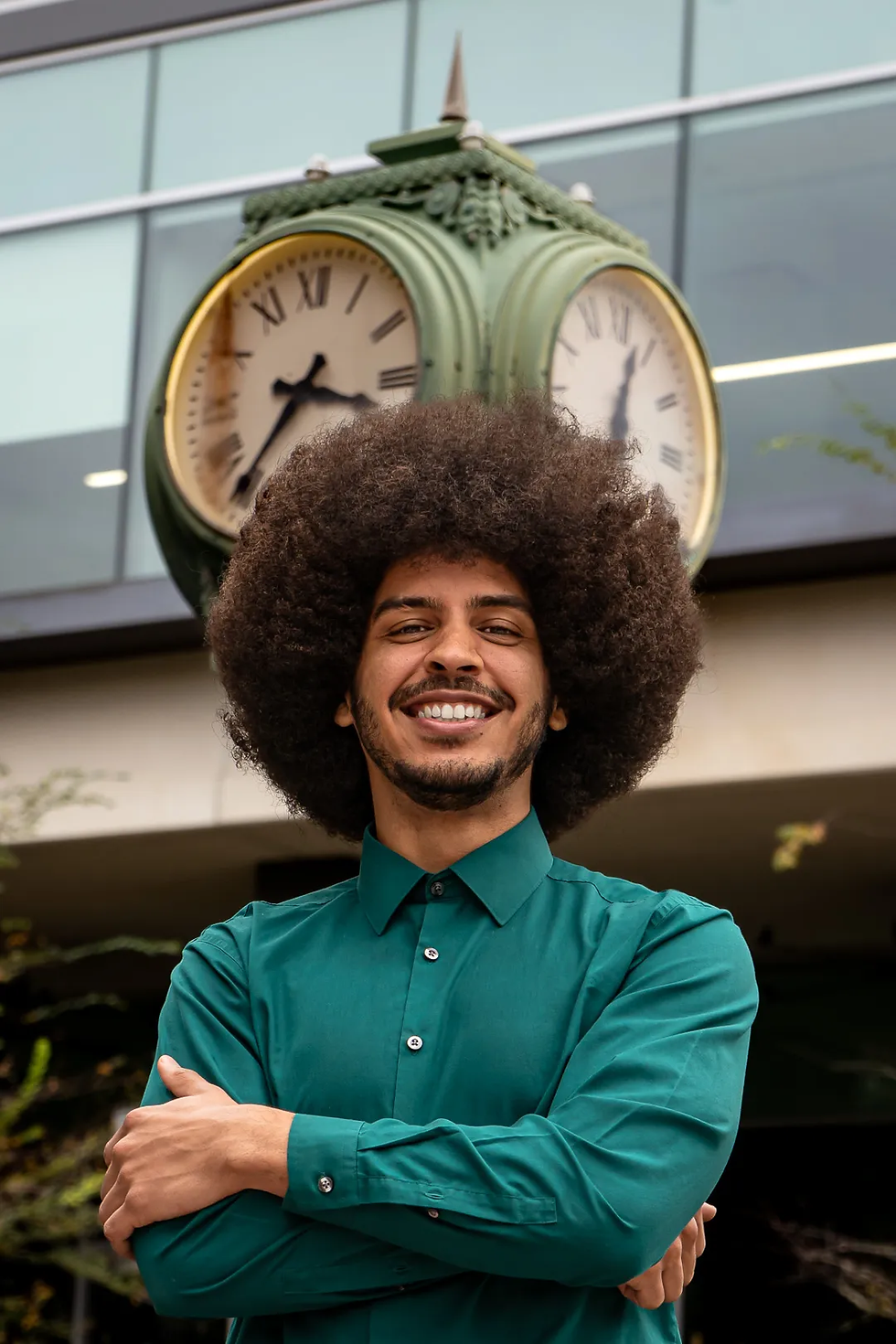
Dar Alfred — The Emerging Community Candidate
ALERT Community Rating: 2.12 / 4
The case for Alfred
Dar Alfred may have shown the most growth of any candidate during this election cycle. His community work around gardening, local food, wellness, and sustainability gives his candidacy an authenticity that is difficult to fake. His background includes helping establish community-oriented food spaces and working with the Frenchtown Farmers Market; his biography also emphasizes his working-class experience and daily interactions with residents through real estate and ride-share work.
That produces an interesting political profile: someone talking about housing, transportation, food and affordability partly from lived experience rather than solely from policy papers.
His campaign has also operated with dramatically fewer financial resources than the leading campaigns. The available financial summary reports approximately $11,386 in contributions.
The concern
Alfred’s challenge is credibility through demonstrated history. Many ALERT reviewers simply did not know him before this campaign.
That produced two related questions: Where was his visible engagement on Black political issues before seeking office, and what sustained record demonstrates that these commitments will continue after Election Day?
Those are not necessarily disqualifying questions for a first-time candidate. Every established leader was unknown once. In fact, Alfred may be one of the candidates worth watching beyond 2026. If he continues organizing, advocating, and showing up after this election regardless of the outcome, the central criticism of his candidacy begins to disappear.
ALERT read
Strength: Authenticity, visible growth, environmental and food-system interests, working-class perspective and potential.
Question: Whether this campaign represents the beginning of sustained civic leadership or primarily an election-cycle emergence.

Tom Derzypolski — The Consensus-Building Moderate
ALERT Community Rating: 1.38 / 4
The case for Derzypolski
Tom Derzypolski presents himself as the pragmatic, level-headed consensus builder in the field. His platform emphasizes responsible growth, public safety, economic development, fiscal responsibility, parks and meaningful community input. His biography includes Navy service, business leadership, and extensive civic board involvement.
His campaign’s language is deliberately managerial rather than ideological. Derzypolski says Tallahassee can move forward if the community leads with “integrity, serves with purpose, and works together.” And financially, he demonstrated significant establishment strength very quickly: his campaign reported raising $60,122 in its first few weeks alone, and official filings show another $32,806 during the following reporting period plus $2,750 in the June 1–12 period.
The concern
The problem for many ALERT reviewers was not what Derzypolski said. They generally liked what he said. The question was where this relationship had been before now?
Despite his long civic résumé, reviewers had difficulty identifying a comparable history of visible involvement in Black neighborhood struggles or outspoken advocacy around specifically Black community concerns. That does not mean he would be hostile to those interests. It means the evidence available to our reviewers was thinner.
ALERT read
Strength: Temperament, professionalism, civic experience and an apparent ability to work across political divisions.
Question: Whether consensus-building will include confronting entrenched inequities when doing so requires more than finding the middle ground.

Norm Roche — The Experienced but Least-Known Candidate
ALERT Community Rating: 1.11*
*A majority of ALERT reviewers indicated they lacked enough information to fully assess Roche.
The case for Roche
Roche deserves inclusion precisely because ALERT’s limited-information designation tells voters something important: our membership did not know enough about him to confidently judge his candidacy.
That does not mean he lacks experience. Quite the opposite. Roche previously served as a Pinellas County commissioner and has emphasized fiscal responsibility, infrastructure and accountable government.
In a recent interview, Roche argued that commissioners should leave partisan ideology outside City Hall: “You’re there to work for the citizens.” He has also advocated what he calls “intelligent growth” that balances development with quality of life.
His available campaign-finance summary reports approximately $6,886 in contributions, including candidate self-funding.
ALERT read
Strength: Actual elected-government experience and a pragmatic emphasis on administration, infrastructure and fiscal management.
Question: Limited relationship and familiarity with ALERT reviewers and insufficient evidence for many members to assess his record on issues specifically affecting Black Tallahassee.
The Bigger Question in Seat 3
This race presents Black voters with several different definitions of “qualified.”
Edwards offers the strongest pre-existing community relationships.
Perez offers perhaps the clearest progressive ideological agenda.
Herrle offers substantial political and technical experience.
Derzypolski offers temperament, civic credentials and consensus-building.
Alfred offers lived experience, authenticity and emerging potential.
Roche offers previous elected experience but remains comparatively unknown to many ALERT reviewers.
That is precisely why this race deserves more than a yard-sign analysis. Our next commissioner will cast only one vote—but that vote can determine whether Tallahassee confronts inequity or manages around it; whether neighborhoods shape development or simply react to it; and whether Black communities are consulted during campaigns or actually included in governing.
For ALERT, the standard should remain simple: don’t just tell us what you will do for Black Tallahassee. Show us who you have been, who surrounds you, who finances you, what you are prepared to fight for—and then keep that same energy after Election Day.
Note: Campaign-finance totals above reflect the latest summaries available in the sources reviewed and may not include contributions reported after those sources’ latest filing data.


Comments